
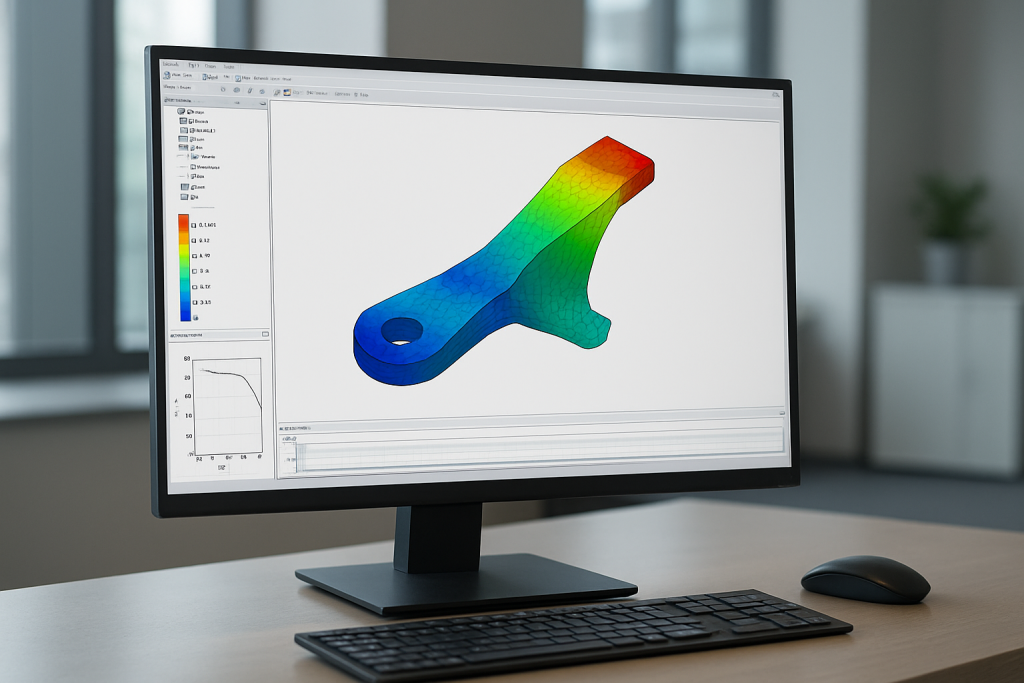
Modern product development requires more than creative ideas and accurate 3D models. Manufacturers and engineering teams must ensure products perform reliably under real-world conditions before production begins. Engineering simulation has become an essential part of the design process because it helps businesses improve product quality, reduce development risks, and accelerate time to market.
By integrating simulation tools into product development workflows, companies can make smarter engineering decisions while reducing costly production errors.
Understanding the Importance of Engineering Simulation
Engineering simulation allows designers and engineers to test how products will perform under various conditions using virtual analysis tools.
Identifying Design Issues Early
Detecting problems during the early design stage helps businesses avoid expensive corrections later in the manufacturing process. Simulation tools can identify weaknesses, stress points, and performance limitations before physical prototypes are created.
Improving Product Reliability
Products are often exposed to pressure, vibration, temperature changes, and repeated usage. Simulation software helps engineers evaluate how products respond to these conditions, improving overall reliability and safety.
Reducing Development Costs and Delays
Engineering simulation not only improves product performance but also helps businesses control operational costs and development timelines.
Fewer Physical Prototypes
Traditional product testing often requires multiple physical prototypes, which can increase material and labor expenses. Virtual simulation reduces the need for repeated prototype production by allowing engineers to validate designs digitally.
Faster Product Development
Simulation tools speed up decision-making by allowing teams to quickly analyze design changes and optimize product performance. Faster testing and validation help companies shorten development cycles and improve production efficiency.
Many businesses planning to upgrade their engineering systems eventually decide to buy SolidWorks software because of its integrated simulation and product development capabilities. Using a connected design and analysis platform helps teams improve workflow efficiency while maintaining design accuracy.
Supporting Better Collaboration Across Teams
Engineering simulation also strengthens communication between departments involved in product development.
Shared Performance Insights
Simulation results provide visual data that can be easily understood by design, manufacturing, and management teams. This improves collaboration and supports more informed project decisions.
Improved Manufacturing Preparation
By validating products before production begins, manufacturers can reduce machining issues, assembly problems, and unexpected production delays. This helps improve operational planning and manufacturing consistency.
Understanding the overall SolidWorks price structure is also important for companies evaluating engineering software investments. Businesses should consider not only software licensing costs but also the long-term value provided through simulation, productivity improvements, and reduced development expenses.
Building Smarter Product Development Processes
Engineering simulation has become a critical part of modern product design because it helps businesses create more reliable, efficient, and cost-effective products. By identifying issues early, reducing prototype requirements, and improving collaboration across teams, simulation tools support faster and more accurate product development. Companies that integrate engineering simulation into their workflows are better prepared to improve product quality and remain competitive in today’s demanding manufacturing environment.
You may also like
-
Find Person by Face Using Intelligent AI Recognition Tools | FaceFinderAI
-
API-Ready Age Verification Software Designed for Easy Integration
-
AI Chat Channel for Interactive Roleplay
-
Best eSIM for Europe: Compare Plans, Prices, and Coverage
-
Stuart Piltch Philanthropy: Empower communities with impactful, purpose-driven initiatives.